3610500B0200
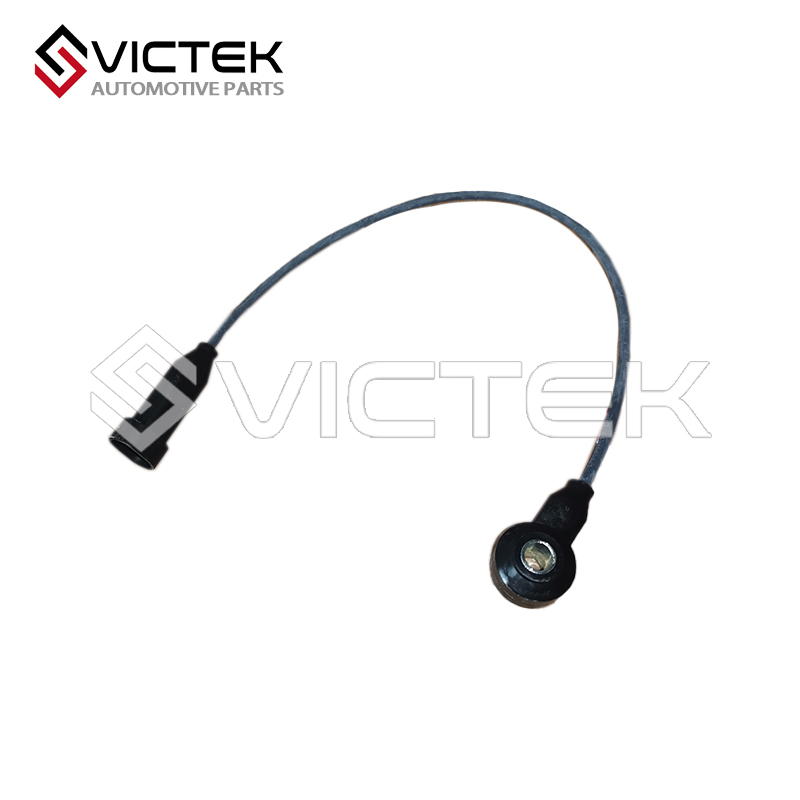
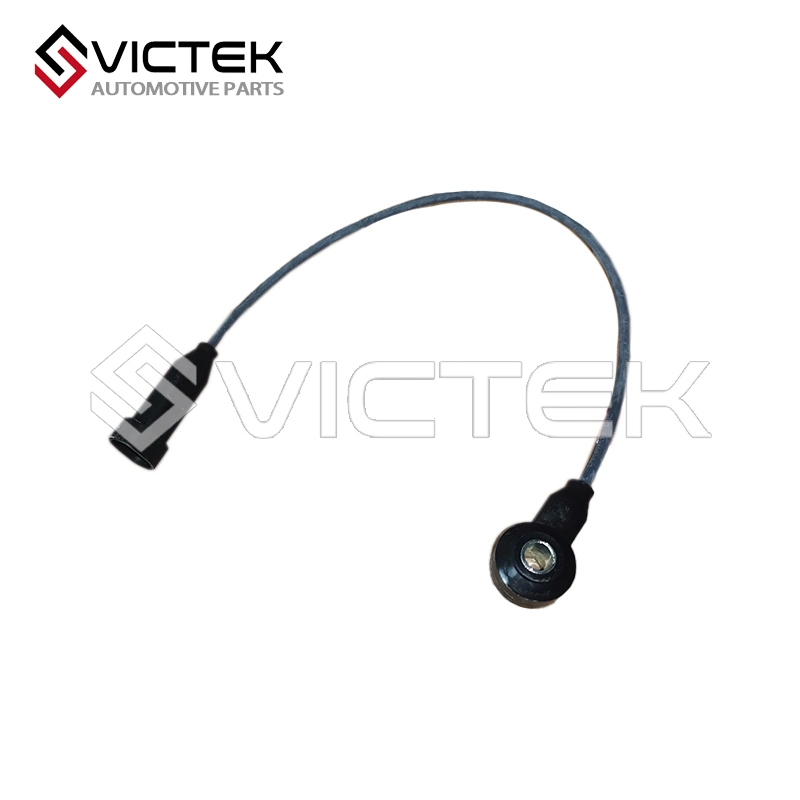
Knock Sensor3610500B0200 Product Introduction
The Knock Sensor of Dongfeng Fengguang ix5 (Dignity IX5) is one of the core components of the engine management system. It is used to monitor in real time whether knocking (abnormal combustion) occurs during the combustion process and adjust the ignition timing through signal feedback to protect the engine. The following is a detailed analysis from aspects such as structure, working principle, technical parameters, installation location, part number and maintenance points:
I. Structure and Working Principle
The core structure adopts a piezoelectric design, mainly consisting of piezoelectric ceramic crystals, inertial counterweights, shielded wire harnesses and a metal casing. The piezoelectric ceramic crystal is closely attached to the inertial counterweight block through screws, forming a pressure-sensing structure sensitive to mechanical vibration.
Working mechanism
Knock detection: When an engine experiences knock, the combustion pressure wave causes high-frequency vibration of the cylinder block (approximately 6000Hz). The inertial counterweight blocks transmit the vibration to the piezoelectric ceramic crystal, generating polarized charges and outproducing a voltage signal (typically 0.1-5V AC).
Signal processing: The signal is transmitted to the engine control unit (ECU) through the shielded wiring harness. The ECU determines the knock intensity based on the signal amplitude and frequency, and delays the ignition advance Angle to eliminate the knock.
Ii. Technical Parameters and Compatibility
Performance indicators
Frequency range: Covering 3-22kHz, with a center frequency of approximately 5.4kHz, it can precisely capture the characteristic frequencies of detonation.
Sensitivity: The sensitivity is 26±8mV/g at 5kHz, and the linearity error is ≤±15% within the amplitude range of 0.1-10g.
Temperature resistance: The operating temperature range is from -40 ℃ to 130℃, which can adapt to the high-temperature environment in the engine compartment.
Electrical characteristics: Resistance value > 1MΩ, capacitance value 1200±400pF, ensuring stable signal transmission.
The engine is matched with a 1.5T turbocharged engine (model SFG15T) that is compatible with Dongfeng Fengguang ix5. This engine adopts a four-cylinder in-line layout, and the knock sensor 3610500B0200achieves full-cylinder monitoring through a single-sensor solution.
Fault Diagnosis & Maintenance
Common Fault Signs
Engine judder or loss of power: If the sensor conks out, the ECU can’t tweak the ignition timing properly—and that leads to constant detonation.
Stored fault codes: You might see codes like P0325 (that’s a knock sensor 3610500B0200circuit problem) or P0324 (an issue with the detonation control system).
Worse fuel economy: When the ignition advance angle is off, combustion gets less efficient—so you’ll burn more gas.
How to Test It
Resistance check: First, disconnect the sensor’s wiring harness. Then measure the resistance between its two terminals. At 20℃, it should be over 1MΩ. If not, you’ll need a new sensor.
Waveform test: Grab an oscilloscope to check the sensor’s output. When there’s detonation, you’ll see a high-frequency sine wave. When there’s no detonation? Just low-amplitude noise.
Wiring check: Look over the harness—make sure there’s no open circuit, short circuit, or damage to the shielding. Also, check if the terminal connections are loose.
Preventive Upkeep
Regular cleaning: Every time you do maintenance at 20,000 km, wipe down the sensor’s surface and clean its mounting hole. That way, carbon buildup or metal bits won’t mess with how it works.
Fuel tips: Use gasoline that’s at least 92 octane and meets the car’s specs. Low-grade fuel is a common cause of detonation—so skip that.
Tech Upgrades & Industry Trends
Better materials: Newer knock sensors 3610500B0200use high-heat ceramic (like silicon nitride) that can handle temps over 160℃. That makes them more reliable long-term.
Integrated designs: Some high-end cars combine the knock sensor with the crankshaft position sensor. This simplifies the wiring and keeps signals in sync—but the Dongfeng Fengguang ix5 still uses a standalone sensor.
Smarter diagnostics: Down the line, AI algorithms might be used to analyze knock signals. This would let cars predict detonation more accurately and adjust ignition on the fly—helping save even more gas.
With all this, you’ll have a solid handle on the Dongfeng Fengguang ix5’s knock sensor3610500B0200—from its tech details to how to keep it in shape. If you need to replace or fix it, check the car’s maintenance manual (like the one for 2019-2021 ix5 models) or reach out to Dongfeng’s official after-sales team for pro help.

Nothing’s more annoying than hunting for an auto part—only to find it works for one model. You’re stuck scrolling 10 listings, calling shops, and wasting your afternoon just for a simple filter or bulb. Good news: we’ve got a fix.
Our auto part? It’s the “one-size-fits-most” of cars—but way more reliable. No need to stress if it fits your Toyota Corolla, Honda Civic, or your cousin’s old BMW 3 Series. It works with most Japanese, German, and even some American models—over 50 popular makes, from super common cars to less mainstream ones.

Contact us